If you are looking for the quick answer because your new rug just arrived and you’re worried about ruining it, here is the core truth: the best vacuum for a jute rug is one that relies on high suction rather than aggressive agitation. You want a machine where you can completely turn off the rotating brush bar (also known as the beater bar) or a suction-only canister vacuum. Jute is a beautiful, sustainable material, but its plant-based fibers are surprisingly brittle. Using a standard upright vacuum with a stiff, spinning brush will shred those fibers over time, leading to excessive shedding and a fuzzy, worn-out appearance within months.
Choosing the right tool for this specific flooring requires looking past the marketing jargon of “deep cleaning” and focusing on adjustable airflow and gentle attachments. After digging into the mechanics of how natural fibers interact with different vacuum heads, it becomes clear that the goal isn’t to scrub the rug, but to lift the dust that settles deep within the chunky weave. A vacuum with variable suction power is your best friend here, as it allows you to pull dirt out without lifting the rug off the floor or snapping the delicate braids of the weave.
Why Jute Rugs Require a Specific Type of Vacuum Cleaner
Jute is harvested from the skin of the jute plant, and while it is remarkably strong in terms of tensile strength, it lacks the elasticity of synthetic fibers like nylon or the resilience of wool. When you look closely at a jute rug, you’re seeing bundles of cellulose and lignin. These fibers are dried and spun, creating that classic earthy texture we love in our living rooms. However, because they are essentially dried plant matter, they do not react well to being beaten. Most modern vacuums are designed to agitate carpet fibers to loosen dirt, but on a jute rug, that agitation acts like sandpaper.
The most common issue owners face is “sprouting.” This is when small ends of the jute fibers pop out of the weave, making the rug look hairy or unkempt. While some sprouting is natural, an aggressive vacuum cleaner accelerates this process significantly. Furthermore, jute rugs are notorious for shedding a fine, sand-like dust. This isn’t actually dirt from your shoes; it is the breakdown of the jute fibers themselves as they rub against each other and the floor. A high-quality vacuum needs to be able to suck up this fine silt from beneath the rug without destroying the top layer in the process.
The Risk of Mechanical Agitation
Standard vacuum brush bars are designed to flick dirt upward. On a plush synthetic carpet, this is fine. On a jute rug, those stiff bristles catch on the uneven loops of the hand-woven material. If the brush bar doesn’t have a shut-off switch, it will eventually pull at the loops, causing them to fray or even unravel. This is why many rug manufacturers specifically state that their warranties are voided if a beater bar is used. You need a vacuum that offers a “hard floor” setting or a specialized floor tool that uses only air and soft felt or brushes that do not rotate.
Dust Accumulation and Fiber Shedding
Because jute has a very open, porous weave, dirt doesn’t just sit on top; it falls through the gaps and sits on the rug pad or the floor beneath. A weak vacuum might make the surface look clean while leaving a layer of abrasive grit underneath. This grit acts like a saw, cutting the bottom of the jute fibers every time you walk across the rug. Therefore, the “best” vacuum isn’t just the gentlest—it also needs enough raw suction (measured in CFM or Air Watts) to pull debris through the thick weave of the rug.
Suction vs. Agitation: The Best Vacuum Features for Jute

When you’re shopping for a vacuum specifically with natural fibers in mind, you have to ignore the “multi-surface” claims on the box unless those claims are backed up by manual controls. The most important feature is a brush roll on/off switch. Many cordless sticks and entry-level uprights have brushes that spin the moment the machine is turned on. These are a no-go for jute. You want a dedicated button or a mechanical lever that stops the brush entirely while keeping the suction motor running at full tilt.
Variable suction control is the second most critical feature. Jute rugs can be surprisingly light or have loose weaves. If your vacuum is too powerful and you can’t turn the suction down, the vacuum head will “stick” to the rug, making it impossible to move and potentially stretching the weave. High-end canister vacuums often have a dial or digital buttons to adjust the motor speed, which is ideal for transitioning from a delicate jute rug to a durable hardwood floor.
HEPA Filtration and Fine Particulates
As mentioned, jute produces its own “dust” as it ages. This fine organic matter can be an irritant for people with allergies. A vacuum with a sealed HEPA (High-Efficiency Particulate Air) system ensures that the fine jute dust you suck up stays inside the vacuum rather than being exhausted back into your breathing air. If you notice a “musty” smell when vacuuming your natural fiber rugs, it’s often because the vacuum is leaking fine particles. Look for models with bagged systems or high-quality, washable filters that are tightly sealed within the chassis.
Floor Tool Attachments
The best attachment for a jute rug is often a simple “Parquet” tool. These are wide, flat heads with soft natural hair bristles around the edge and a large suction opening in the middle. They don’t have any moving parts that can catch on the rug. If you prefer an upright, look for one with a high-clearance head. A head that sits too low to the rug can create a seal that pulls too hard on the fibers, whereas a higher clearance allows air to flow around the rug, lifting dirt more effectively without the mechanical strain.
Top-Rated Vacuum Cleaners for Jute and Natural Fiber Rugs
I have looked at the current market through the lens of a natural-fiber enthusiast. Here are the models that balance the need for high suction with the necessary gentleness for jute. These products are widely available through major retailers like John Lewis, Currys, or Amazon, often falling under affiliate programs like Awin which ensures they are backed by solid return policies and manufacturer warranties.
| Model | Approx. Price | Key Pro | Key Con |
|---|---|---|---|
| Miele Complete C3 Calima | £300 – £450 | Exceptional suction control & Parquet Twister head | Requires ongoing cost for bags |
| Dyson V15 Detect | £500 – £650 | Brush bar can be swapped for Fluffy Optic head | Expensive; battery life limited on high suction |
| Shark Stratos Cordless | £350 – £480 | DuoClean head allows for gentle suction-only mode | Can be heavy in the hand during long sessions |
| Sebo Felix Premium | £340 – £400 | Professional grade; brush can be turned off manually | Industrial aesthetic isn’t for everyone |
| Numatic Henry Allergy | £160 – £200 | Simple, suction-only design; very durable | No motorized head for other carpeted areas |
Miele Complete C3 Calima (The Gold Standard)
The Miele C3 series is frequently cited by rug specialists as the best option for high-end natural fibers. The Calima model, in particular, comes with the SBB 300-3 Parquet Twister floorhead. This head is designed for hard floors but works beautifully on jute because it uses soft, natural bristles that glide over the bumps of a woven rug without snagging. The C3 has a foot-pedal operated suction control with six settings. For a jute rug, you can dial it down to the “rug” or “upholstery” setting to ensure you aren’t pulling the fibers too aggressively. It is a bagged vacuum, which is actually a benefit here; the bags act as an extra layer of filtration for that fine jute silt.
Dyson V15 Detect (The Versatile Cordless)
While many people worry about Dyson’s powerful brush bars, the V15 is actually excellent for jute if you use the right attachment. It comes with the “Fluffy Optic” cleaner head, which is a soft roller designed for hard floors. Because this roller is made of soft nylon and anti-static carbon fiber filaments, it doesn’t have the stiff bristles that cause sprouting. It gently sweeps the surface while the high-torque motor provides enough suction to pull dirt from the backing. If you use the standard “Digital Motorbar” head, make sure you use the slider on the front to open the suction gates, reducing the pressure on the rug surface.
Shark Stratos Cordless with DuoClean
Shark’s DuoClean technology is a bit of a hybrid. It features two brush rolls in one head: a soft front roller and a stiffer rear power fins roll. For jute, this is a bit of a gamble, but the Stratos allows you to toggle the speed. On the “Hard Floor” setting, the brushes spin much slower, relying more on the vacuum’s suction. The benefit here is the “Clean Sense IQ” which detects hidden dirt and ramps up the suction only when needed. It’s a solid middle-ground for someone who has a mix of jute rugs and thick synthetic carpets and doesn’t want to swap heads constantly.
How to Vacuum Jute Rugs Without Damaging the Fibers

Even with the best vacuum, your technique can determine whether your rug lasts five years or fifteen. The first rule is frequency. You should vacuum a jute rug at least twice a week. This might seem excessive, but because the fibers are abrasive, letting dirt sit in the weave actually speeds up the breakdown of the rug. You want to remove those particles before they have a chance to settle and act like sandpaper under foot traffic.
When you vacuum, use slow, deliberate passes. Fast, jerky movements are more likely to catch a loose fiber and pull it out. Move the vacuum in the direction of the weave if possible. Most jute rugs are woven in a specific direction; going “against the grain” can lift the fibers and encourage shedding. If you have a round jute rug, work from the center outward in a sunburst pattern to avoid putting too much stress on the braided edges.
- Check the settings: Ensure the beater bar is OFF. If your vacuum doesn’t have an off switch, use the upholstery tool attachment instead.
- Adjust suction: Set your vacuum to medium-high suction. Too high and you’ll struggle to move the head; too low and you won’t get the silt out from the bottom.
- Vacuum the top: Pass over the rug twice in each section using overlapping strokes.
- Vacuum the underside: Once every few months, flip the rug over. You will likely find a layer of fine dust on the floor. Vacuum the floor directly and then the back of the rug before flipping it back.
- Handle the edges: Be extremely careful with the bound edges or fringe. Use the crevice tool or a soft dusting brush for the borders to prevent the vacuum from sucking up the edge and fraying it.
Always test your vacuum on a small, inconspicuous corner of the rug first. If you see any fibers being pulled into the vacuum or notice immediate fuzzing, stop and switch to a lower suction setting or a different attachment.
Maintenance Tips to Extend the Life of Your Jute Rug
Vacuuming is only half the battle. Because jute is a natural plant fiber, it reacts to its environment in ways that plastic-based rugs do not. Humidity, for instance, is a major factor. In very dry environments, jute becomes more brittle and prone to snapping. In very humid environments, it can absorb moisture and develop mold or a strong “barn-like” odor. Keeping your home at a consistent humidity level helps maintain the structural integrity of the fibers, making them more resistant to the mechanical stress of vacuuming.
Spills are the enemy of jute. Unlike wool, which has natural lanolin to repel liquids, jute is highly absorbent. If you spill water, it can leave a brown “water stain” as the tannins in the plant fibers react. If you have a spill, do not scrub it. Scrubbing will destroy the texture of the rug instantly. Instead, blot the area with a clean white cloth and use a hair dryer on a cool setting to dry the area as quickly as possible. Once dry, you can vacuum the spot to help realign the fibers.
Dealing with Shedding and Sprouting
If you notice a “sprout” (a fiber sticking up), do not pull it. Pulling a sprout can cause a run in the weave, much like a snag in a sweater. Instead, take a sharp pair of scissors and snip the fiber flush with the surface of the rug. This is a standard part of jute maintenance and won’t harm the rug. Regular vacuuming with a suction-only machine will actually reduce the amount of sprouting over time as the looser fibers are gently removed before they can work their way out completely.
Rotating for Even Wear
Jute rugs should be rotated 180 degrees every six months. This is especially important if part of the rug is in a high-traffic path or under direct sunlight. Sunlight can fade the natural golden tones of the jute and make the fibers even more brittle. By rotating the rug, you ensure that the mechanical wear from both foot traffic and vacuuming is distributed evenly across the entire surface, preventing “paths” from forming in the weave.
Comparing Stick, Upright, and Canister Vacuums for Jute
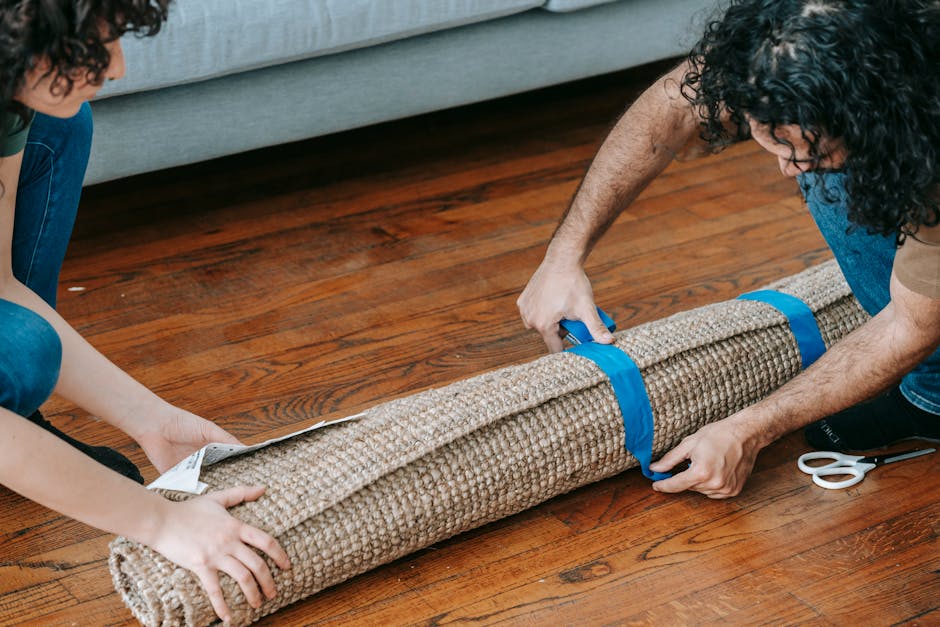
The form factor of your vacuum cleaner changes how it interacts with a heavy, textured rug. Canister vacuums are generally preferred for jute because the weight of the motor is on the floor, not in your hand. This allows the floor head to be lighter and more maneuverable, making it easier to glide over the chunky texture of the jute without digging in. Uprights, while convenient, often have much heavier floor heads that can compress the jute fibers too much during cleaning.
Stick vacuums are a popular choice for their convenience, but you must be careful with their weight distribution. Since the motor and battery are near the handle, it’s easy to inadvertently press down too hard on the rug. If you use a stick vacuum, let the machine’s own weight do the work. The following comparison looks at how these different types fare specifically on natural fibers.
- Canister Vacuums: Best for deep cleaning and fiber preservation. The separate wand allows for the use of specialized, non-motorized tools like parquet brushes. Models like the Miele C3 or Henry Allergy are top picks here.
- Upright Vacuums: Generally less ideal unless they have a very high manual height adjustment. The Sebo Felix is a rare exception that works well because of its professional-grade brush control.
- Cordless Stick Vacuums: Great for quick daily pickups of surface debris. However, they often lack the raw CFM of a corded canister for pulling that deep-seated silt through the rug backing. The Dyson V15 with a soft roller is the best in this category.
- Robot Vacuums: Generally not recommended for jute. Most robot vacuums have small, fast-spinning side brushes and beater bars that they cannot turn off. They also tend to get stuck on the thick edges of woven rugs.
Ultimately, the goal is to find a balance between effective cleaning and long-term preservation. A jute rug is an investment in your home’s aesthetic and environmental footprint. By pairing it with a vacuum that respects the delicate nature of plant fibers—one that prioritizes airflow over agitation—you can enjoy that natural, organic look for many years without the mess of excessive shedding or the frustration of a frayed weave.